

Booty Bands Exercises for Glute Strength
Booty Bands Exercises for Glute Strength
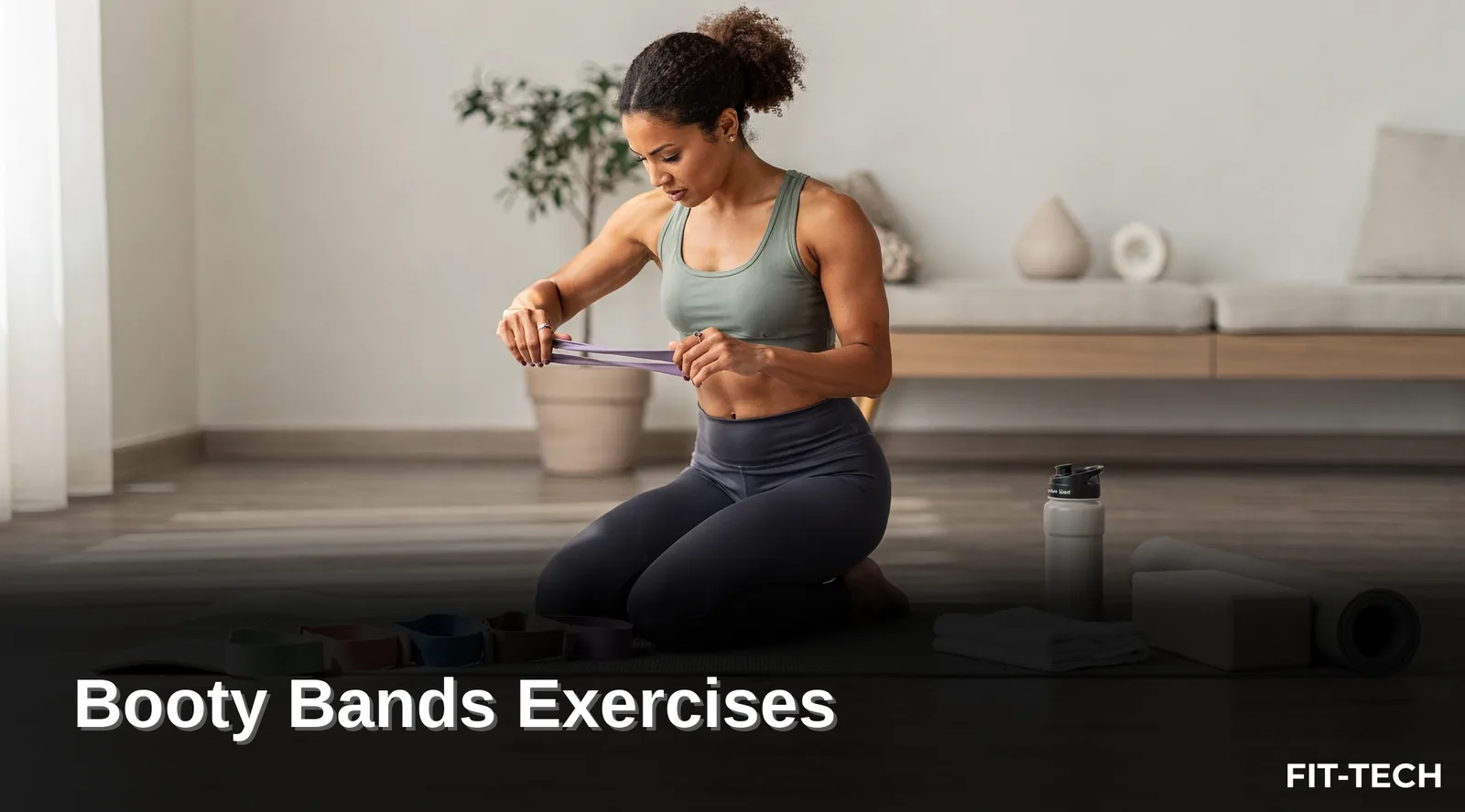
Booty bands build glute strength through targeted movements like banded squats, lateral walks, and glute bridges, which activate the glutes and thighs before heavier resistance training. Fit-Tech's Booty Bands are the loop-band tool built for exactly this kind of work.
What do you need before starting booty bands exercises?
Booty bands exercises require minimal equipment, making them accessible for any training environment. A single loop resistance band provides the primary tool for glute activation and lower body training. These bands have remained popular for years because of their effectiveness and portability. Fit-Tech's Booty Bands come in three resistances — light, medium, and heavy — plus a carry bag and a workout booklet, so there's no guesswork about which band to grab or what to do with it.
What type of band works best for glute training?
Glute band exercises call for a specific band style. Loop resistance bands, also known as mini bands — like Fit-Tech's Booty Bands — sit around the thighs or ankles without slipping. Fit-Tech builds theirs from a fabric designed not to snap or break under repeated tension, which matters given how much stretching and releasing a band goes through across a single workout. A lighter band works well for warm-ups, while a heavier band suits strength-focused sets — the light/medium/heavy set covers both ends without needing to buy separately.
What other gear supports band training?
- Sturdy anchor point: a squat rack leg, heavy dumbbell, or door anchor secures the band for resisted movements.
- Non-slip surface: a yoga mat or carpet prevents the band from rolling during floor exercises.
- Proper footwear: flat-soled shoes or bare feet improve stability during standing movements.
Resistance bands are lightweight, versatile, and inexpensive, which is part of why they're one of the most convenient pieces of home and gym equipment available.
How do you perform a booty bands workout, step by step?
A proper booty bands workout follows a simple sequence: warm up the glutes, perform compound moves, then finish with high-rep burnout sets. Resistance bands deliver significant intensity and burn to the glutes and thighs on their own, making them a complete lower-body training tool.
Step 1: Choose the right band resistance. Start with a light band for warm-up sets. A band that feels challenging for 15 reps works for the main workout.
Step 2: Activate the glutes with banded walks. Place the band above the knees. Take lateral steps, keeping tension constant. This primes the glutes for the work ahead.
Step 3: Perform banded squats. Loop the band above the knees and squat normally. In exercises like squats and lunges, the quads often take over when the glutes should do most of the work — the band helps correct this by forcing the knees outward and engaging the glutes.
Step 4: Add banded glute bridges. Lie on the back with the band above the knees. Drive the hips up, squeezing the glutes at the top. This isolates the target muscle directly.
Step 5: Finish with burnout sets. Resistance bands are well suited to burnout-style finishers — high reps at lower resistance, taken to the point where the glutes are genuinely fatigued.

How do bands compare to free weights for glute activation?
Bands offer something free weights don't: constant tension through the entire range of motion, rather than tension that drops off at certain points the way it can with dumbbells. That's part of why band work shows up everywhere from group fitness classes to powerlifting warm-ups. For lifters, bands also serve as a useful warm-up tool before heavy squats or deadlifts.
Why do glutes fail to engage during regular training?
Quad dominance is the most common culprit. When the quads take over during squats and lunges, the glutes stay under-stimulated. Bands correct this by adding outward resistance that forces glute activation, which makes them useful for anyone whose glutes lag behind their quads. Consistent band work builds the mind-muscle connection needed for heavier compound lifts.
Do booty bands work as a standalone lower-body session?
On their own, a set of loop bands can deliver a genuinely demanding lower-body workout — the constant tension and high-rep burnout format is enough to leave the glutes and thighs fatigued without any other equipment. That said, most lifters get the most out of booty bands as a warm-up and activation tool ahead of heavier work, whether that's squats and deadlifts with a barbell, or grip-focused pulling movements where a tool like Power Hooks takes grip out of the equation on the upper-body side. The two solve completely different problems — one is about waking up the glutes before a lower-body session, the other is about grip not being the limiting factor on a pulling set — but plenty of training programs use both in the same week.
Why does adding a band actually build more muscle?
Resistance bands are an effective way to build the glutes, quads, and hamstrings partly because they let you layer two movement patterns into a single exercise. Take a hip thrust: without a band, it's one movement — hip extension, working the glutes. Add a band around the knees, and you're also fighting to keep the knees pressed outward against the band's pull, which brings in an abduction component on top of the original movement. That combination activates more muscle fibre in a single rep than the hip thrust alone would, which is the basic mechanism behind why banded work tends to build glute strength faster than the same exercises done unbanded.

What common mistakes should you avoid with booty band exercises?
The most common mistake is letting the quads take over the movement, which directly reduces glute activation. When a lifter is quad-dominant, the front thigh muscles do the work the glutes should be doing. Bands correct this by creating lateral resistance that forces the hips to engage, shifting the load back to the target muscles. Without that correction, every rep reinforces the wrong movement pattern, and the glutes never fully fire.
How does quad dominance show up in booty bands workouts?
In practice, this shows up as the knees tracking too far forward, or the hips rising before the glutes contract. The band's resistance exposes this imbalance quickly — if the glutes aren't working, the movement feels harder in the quads and easier in the hips. Correcting it takes conscious focus on initiating every rep from the glutes, not the knees.
What equipment issues get in the way of results?
A band that slips, rolls, or digs into the skin creates a second common problem: avoiding full range of motion just to escape the discomfort. The fix is usually proper band placement and tension — position the band just above the knees, and choose a resistance that forces the glutes to work through the full rep, not just the top of it.
Who should actually be using booty bands?
Booty bands make sense for a wider range of people than the name might suggest. Beginners get an accessible way to learn what glute activation actually feels like before adding a barbell to the equation. Intermediate and advanced lifters use them as a pre-set warm-up specifically to correct quad dominance that's crept into their squat or deadlift pattern over time. And anyone doing home workouts with limited equipment gets a genuinely versatile lower-body tool that packs into a bag small enough to travel with — which is exactly why Fit-Tech ships theirs with a carry bag in the first place.
If glutes and lower-body work are the focus, it's worth browsing Fit-Tech's full range of training accessories alongside the Booty Bands themselves, since a lot of lower-body programming pairs band work with other accessories over the course of a week rather than relying on one tool alone.
Conclusion
Booty bands deliver measurable results for glute strength when incorporated consistently into your training routine. Whether you're performing lateral walks, hip thrusts, or kickbacks, these versatile tools amplify muscle activation and build the foundation for lasting strength gains. Fit-Tech's Booty Bands come as a light/medium/heavy set with a carry bag and workout booklet included, so you can pair them with proper form and progressive resistance from the first session — a genuinely useful addition to a lower-body training routine, not just a warm-up afterthought.